
Car Parking Shades in Saudi Arabia
Types, materials, design and installation standards, and how to choose the right system for residential, commercial, and government projectsCar Parking Shades: Engineering Protection & Architectural Value
Car parking shades in Saudi Arabia are no longer simply a way to provide shade. They have become an important part of the external design of buildings and facilities, combining protection, durability, and architectural appeal.
They are particularly important in cities exposed to high temperatures and continuous sunlight. Properly designed shades help protect vehicles, reduce cabin temperatures, and preserve paintwork and interior components from the effects of direct ultraviolet exposure. Professionally designed parking shades also help organize parking areas, improve the appearance of a project, and increase the practical and visual value of the facility.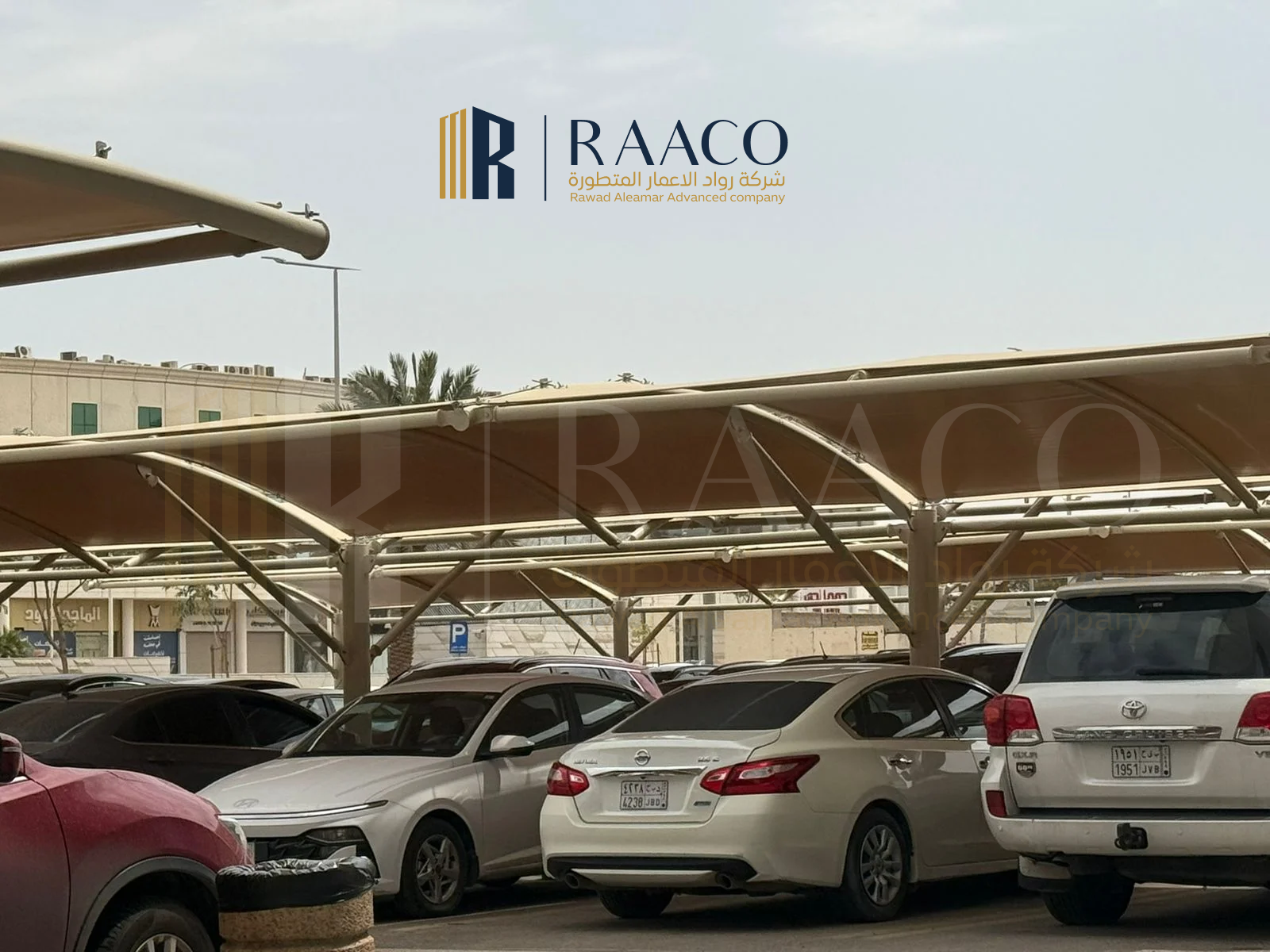
Where Are Car Parking Shades Used?
Car parking shades are used across a wide range of projects. The appropriate system depends on the number of vehicles, site area, ground conditions, circulation direction, architectural design, and the requirements of the owner or consultant.- Villas and residential compounds
- Administrative buildings and corporate headquarters
- Schools and universities
- Hospitals and medical centers
- Commercial complexes and malls
- Hotels and resorts
- Mosques and public facilities
- Factories and warehouses
- Government projects
- Airports and transport stations
- Parks and recreational facilities
Types of Car Parking Shades
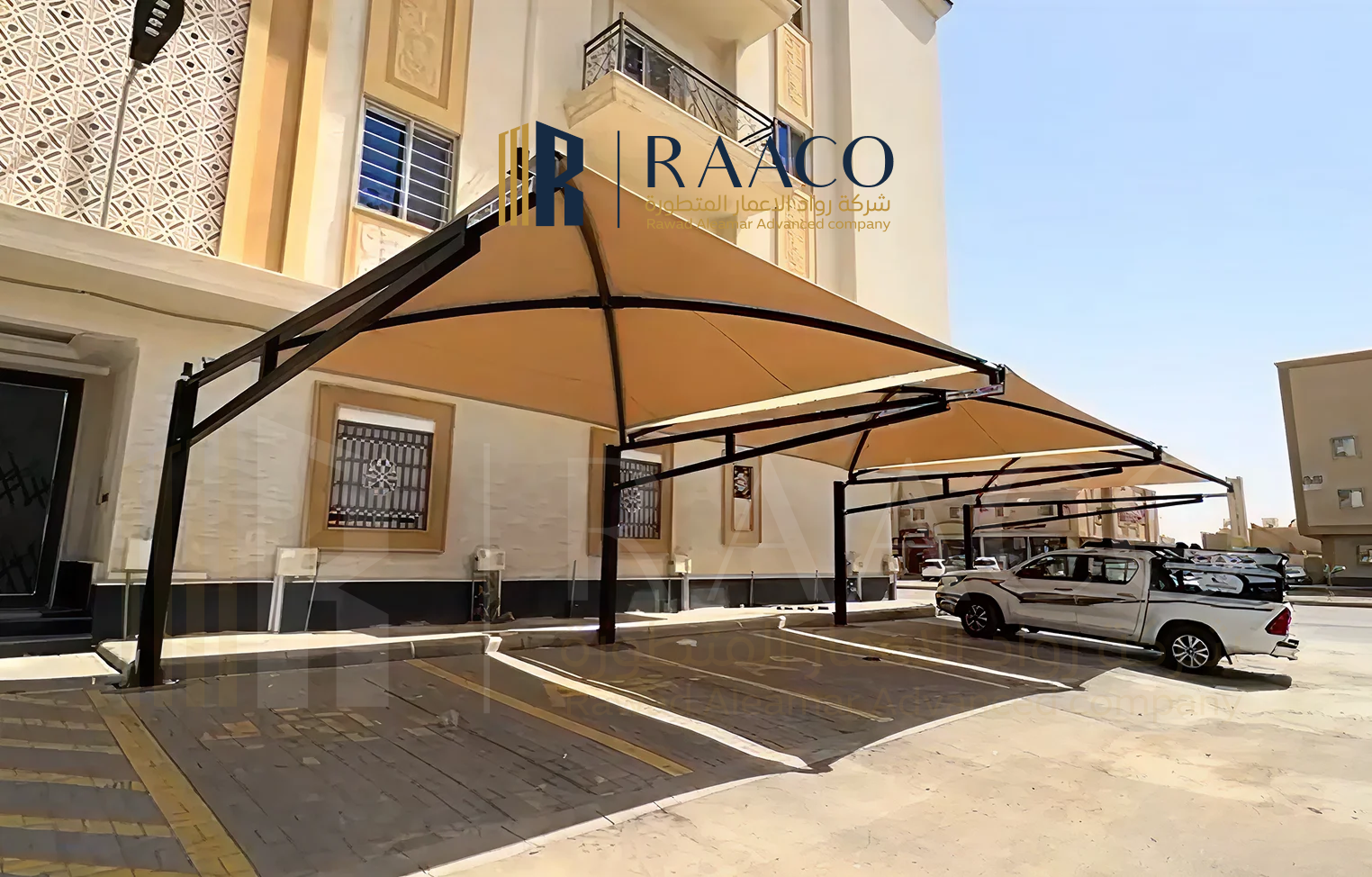
1. Cantilever Car Parking Shades
These systems generally rely on a single row of columns, reducing obstacles around vehicles and making door opening and vehicle movement easier.Advantages
- Wide vehicle movement area
- Fewer columns within the parking area
- Modern architectural appearance
- Can be installed as individual units or long rows
- Suitable for residential, commercial, and administrative projects
- Easy parking-space organization
Common Forms
Single cantilever, double cantilever, T-shaped, Y-shaped, curved, and cable-supported shades.The cantilever arm, columns, and foundations must be designed for the actual project loads, as this system can generate significant moments at connections and foundations.
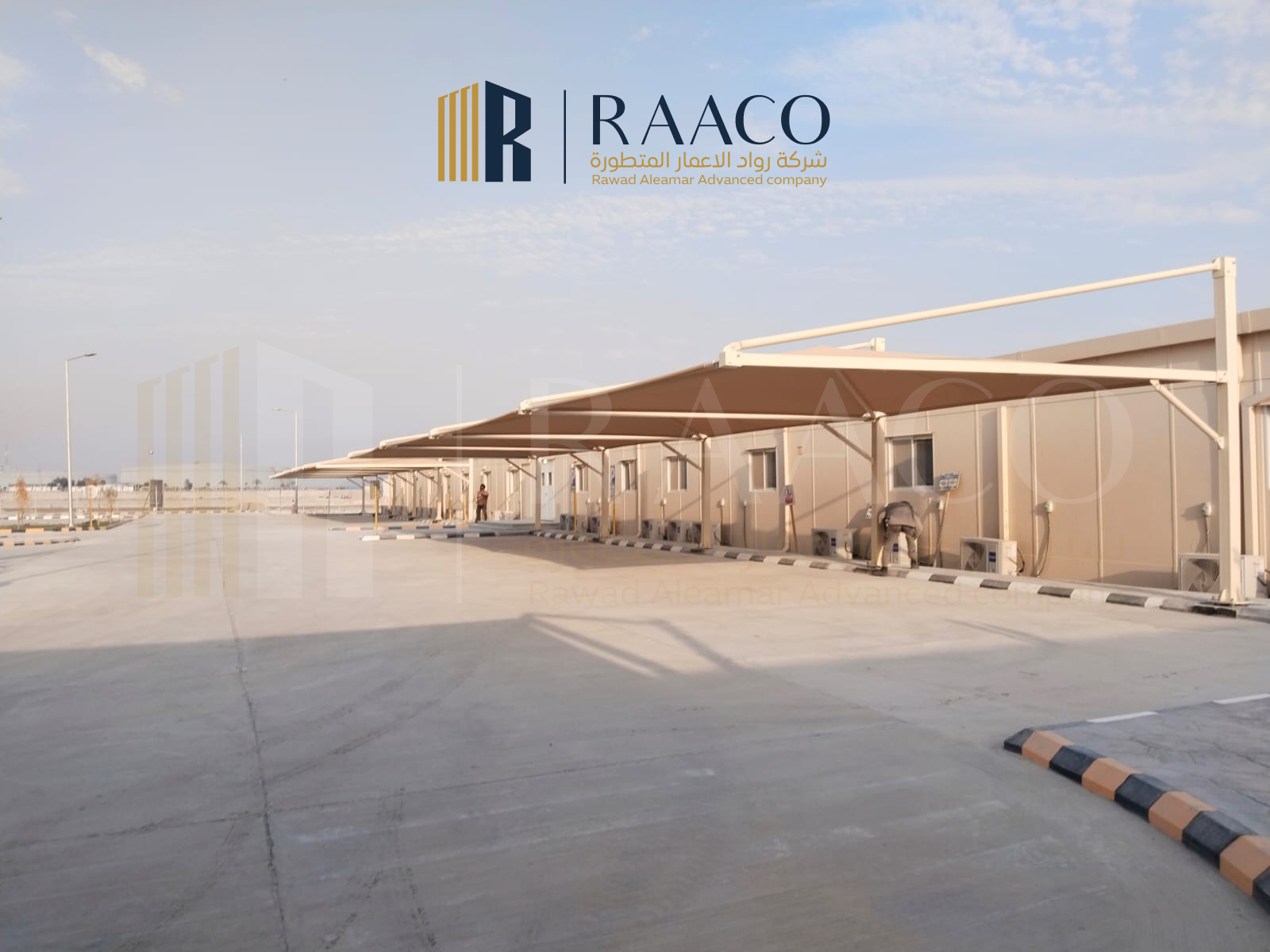
2. Tensile Car Parking Shades
These systems use tensioned fabric membranes supported by an engineered steel structure. They may also include tension cables and specialized fittings to control the membrane geometry and distribute loads.- Flexible and distinctive architectural forms
- Ability to cover large areas
- Lightweight compared with conventional roofing systems
- Relatively fast fabrication and installation
- Potential reduction in structural elements in some designs
- Ability to create curves and varied geometric forms
- Suitable for projects with a distinctive architectural identity
3. Pyramid Car Parking Shades
These systems use high and low points to create a tensioned membrane with an organized geometric form. They are suitable for projects that require a practical shading solution combined with a clear architectural appearance.Car Parking Shade Covering Materials
1. PVDF
PVDF fabrics are widely used in high-specification shade projects. They are typically made from polyester fabric with enhanced protective coating layers.- Good weather resistance
- UV resistance
- Easier-to-clean surface compared with some other materials
- Good colour stability depending on specifications
- Suitable for tensile structural designs
- Suitable for commercial and government projects
When selecting PVDF, verify:
Fabric weight, tensile and tear strength, fire classification, country of origin, coating type, warranty period and conditions, colour, light transmission, and UV resistance.It is not enough to specify only “PVDF fabric,” because quality can vary significantly between manufacturers and specifications.
2. PVC
PVC is one of the most widely used membrane materials in shade and tensile projects because of its flexibility, ease of fabrication, and relatively economical cost compared with some other systems.- High forming flexibility
- Good water resistance
- UV resistance
- Easy welding and fabrication
- Available in multiple colours and thicknesses
- Suitable for many shade projects
3. HDPE (High-Density Polyethylene)
HDPE is one of the most widely used shading materials for open environments, especially in hot climates such as Saudi Arabia and the Gulf region. Its knitted structure allows airflow while providing high levels of solar shading. It is not normally used as a fully enclosed waterproof tensile membrane, but it is an effective solution for car parks, parks, playgrounds, walkways, schools, and public facilities that require natural ventilation together with effective solar protection.- Allows natural airflow
- Reduces heat buildup
- High UV resistance
- Lightweight
- Resistant to moisture and mould
- Resistant to weathering
- Available in multiple colours
- Available in 70%, 80%, 90%, and 95% shading rates
Material Quality Standards
- Fabric weight and technical specifications
- Tensile and tear strength
- UV resistance
- Fire classification
- Weather resistance
- Colour stability
- Coating and surface treatment
- Country of origin and manufacturer
- Warranty period and conditions
- Cleaning and maintenance requirements
How to Choose the Right System
- Determine the number of parking spaces, their layout, and vehicle circulation paths.
- Study site dimensions, levels, obstacles, and existing services.
- Consider sun exposure, wind, rainfall, and environmental conditions.
- Define the required shading level, ventilation, and light transmission.
- Select a form and material that complement the architectural identity.
- Compare installation cost, maintenance requirements, and expected service life.
Engineering & Design Requirements
Good design is the foundation of a safe and durable parking shade. It must be based on the actual project loads rather than appearance alone.- Analysis of wind and other design loads
- Design of columns, beams, and structural sections
- Foundation and anchorage design
- Design of connections, bolts, and welds
- Specification of the fabric or membrane
- Rainwater drainage review where required
- Consideration of vehicle clearance and height
- Integration between structural and architectural design
Common Project Mistakes
- Choosing a system based on price alone
- Using materials without clear technical data
- Neglecting structural calculations
- Failing to study wind loads
- Poor steel surface preparation before coating
- Uneven tensioning in fabric systems
- Neglecting anchorage points and foundations
- Failing to verify underground cables, pipes, and services before excavation
Even the best materials will not deliver the required performance if the design or installation is incorrect.
Car Parking Shade Installation & Execution Stages
- Site inspection and survey.
- Preliminary design, column layout, and covering selection.
- Structural calculations and load analysis.
- Preparation of shop drawings.
- Approval of materials, colours, and technical data.
- Fabrication, cutting, assembly, and welding.
- Surface treatment and coating or galvanising.
- Site installation of the structure and covering.
- Final inspection and handover.
Maintenance & Service Life
Regular maintenance helps preserve the efficiency of the shade system and extend its service life, especially in environments exposed to high temperatures and continuous weather conditions.- Cleaning the membrane or fabric
- Inspecting bolts and connections
- Inspecting welds
- Checking coatings and treating early damage
- Inspecting columns and steel structures
- Inspecting cables and fittings where applicable
- Inspecting anchorage points
- Adjusting or retensioning when required
Why Choose RAACO?
At Rawad Aleamar Advanced Company (RAACO), we believe that a successful car parking shade project starts with the right design and material selection and is completed through accurate fabrication and professional installation.- Site inspection and assessment
- Architectural and structural design
- Structural calculations
- Shop drawings
- Material and fabric selection
- Fabrication and supply
- Installation and supervision
- Inspection and handover
- Maintenance and after-sales services
Integrated Car Parking Shade Solutions from RAACO
We design and execute shading solutions that combine protection, durability, efficiency, and an architectural appearance suited to the project. Contact Rawad Aleamar Advanced CompanyFrequently Asked Questions
Conclusion
Choosing car parking shades is not a decision based on appearance or price alone. It is an engineering decision that balances the system type, material quality, site requirements, environmental loads, and the accuracy of fabrication and installation.
When a project is executed according to a clear engineering study and uses materials with approved specifications, the result can provide effective vehicle protection, long service life, and an appearance that complements the project's identity. RAACO | We design to add value… and execute to make a difference.